All Categories
Featured

Managing Costs With Delaware Solar Panel Installation Companies
Table of Contents
- – Top Rated Delaware Solar Panel Installation Com...
- – Mapping Out The 5 kW–14 kW Standard System Siz...
- – Crucial Tips On HOA And Permit Rules For Solar...
- – The Advantages Of Battery Storage For Your Per...
- – Increasing Access To Delaware Solar Panel Inst...
- – Methods You Can Compare Various Delaware Solar...
Top Rated Delaware Solar Panel Installation Companies For Your Home
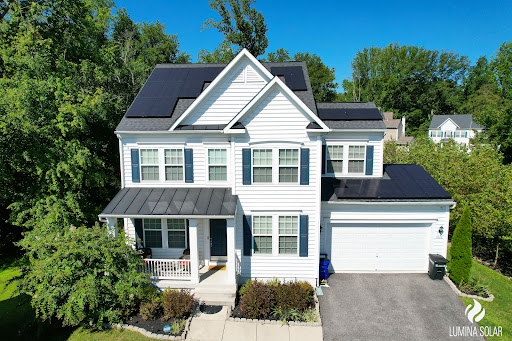
When you start researching Delaware Solar Panel Installation Companies, you are essentially evaluating how a technical system will incorporate with your home to lower long-term utility expenses. Because a typical home system requires a significant upfront investment ranging from $29,720 to $40,210 for a 13.69 kW array at $2.55 per watt, understanding the mechanics of contractor selection is essential for safeguarding your financial interests. The procedure of Finding a solar panel installation company in Delaware involves more than just comparing quotes, as you must also factor in roof suitability, local permitting, and the specific incentives that influence your overall break-even point. By evaluating Delaware-based solar panel installation services based on technical expertise and proven experience, you ensure that your hardware is sized correctly to meet your particular household consumption needs. This post provides the essential knowledge you need to traverse the career landscape and locate the most dependable experts for your project.
“These systems, often accompanied by a battery storage, integrate solar panels with diesel generators to produce power.” — Lumina Solar
Mapping Out The 5 kW–14 kW Standard System Size For Your Solar Panel Installation
The 5 kW–14 kW standard system size is determined by the intersection of your specific household energy usage, available roof space, and the intensity of sunlight reaching your premises. Since solar panels transform light into electricity at a specific efficiency rate, the actual size of your array must scale to match the total kilowatt-hours you use annually. If your roof lacks sufficient surface area or suffers from significant shading, an vendor may be incapable to reach the capacity required to offset your entire utility bill, forcing a trade-off between system footprint and energy production.
“While many states limit the production capacity of residential solar panel systems to each customer's average annual energy consumption, Delaware encourages net metering participants to generate excess electricity by setting the bar at 110% and up to 25 kW.” — solarenergyworld.com
When you begin the procedure of Finding a solar panel installation company in Delaware, the technician will conduct a site assessment to calculate your optimal array capacity. They equilibrate these primary variables to determine your system requirements:
| Variable | Impact on System Size |
|---|---|
| Annual Energy Usage | Higher consumption requires more panels to achieve full offset. |
| Roof Orientation | South-facing roofs optimize sunlight capture, needing fewer panels. |
| Panel Efficiency | Higher-wattage panels decrease the total quantity of units needed. |
| Shading Obstructions | Shrubs or chimneys limit placement, often limiting total system output. |
Before completing a design, ensure your provider provides a manufacturing estimate that accounts for both your current usage and any expected changes in your electrical load, such as the future inclusion of high-demand appliances or electric vehicle charging.
When choosing Delaware Solar Panel Installation Companies, you must evaluate how your system size, typically ranging from 5 kW to 14 kW, interacts with roof solar compatibility and shading to calculate your total price tag. Before you commit to a power purchase agreement or solar financing, you should speak with Solar Panel Installation to evaluate solar company credentials, such as NABCEP certification, and verify how federal tax credit savings and Delmarva Power or Delaware Electric Cooperative rebates influence your recoup period. By leveraging excess energy credits and earning a SREC Token for every 1 MWh produced, you effectively lower your net expenses, though you must first ensure your chosen solar company manages local solar permit requirements and HOA rules to obtain necessary interconnection approval. Whether you are interested in adding energy storage for resilience or exploring affordable solar programs like SHINES Program, obtaining a free assessment allows you to analyze the exact return on investment based on a 13.69 kW system priced at approximately $29,720 to $40,210 before incentives.
Crucial Tips On HOA And Permit Rules For Solar Panel Installation
Managing HOA and permit requirements when Finding a solar panel installation company in Delaware involves handling both municipal regulatory compliance and the private architectural standards enforced by your community association. Before any equipment is installed, your selected installer must secure necessary building permits to guarantee the structure meets local safety codes and secure utility interconnection approval to legally sync your system with the broader electrical grid.
“Notwithstanding division (A) of this section, an owners association may establish reasonable restrictions concerning the size, place, and manner of placement of solar energy collection devices.” — law.justia.com
Homeowners associations (HOAs) establish a layer of oversight that can affect the physical layout of your array. These groups often maintain design guidelines intended to preserve neighborhood appearance, which may dictate where panels can be placed or how wiring must be hidden. To guarantee a seamless process, consider these essential steps for managing community and regulatory reviews:
- Review your association’s Covenants, Conditions, and Restrictions (CC&Rs) to identify explicit solar energy policies.
- Request that your installer supply official engineering drawings that clearly illustrate panel placement and system visibility from the street.
- Submit a formal architectural change request promptly, including any required visual renderings of the finished solar panel installation.
- Confirm that your contractor has a proven track record of effectively navigating local zoning offices and HOA review boards to avoid project delays.
Always confirm with your local municipal planning department whether your specific property requires a structural roof assessment as a mandatory prerequisite for the building permit application.
The Advantages Of Battery Storage For Your Personal Delaware Solar Panel Installation
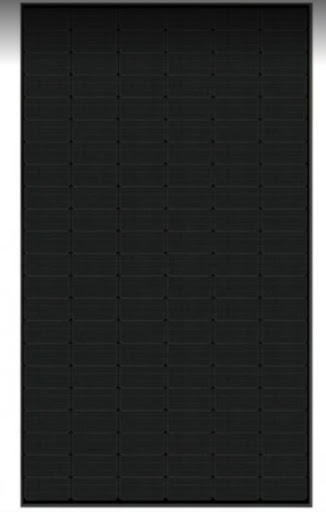
Storage unit is an integrated technology that enables you to store and retain excess electricity generated by your solar setup for use during grid outages or at night when your system is not actively producing power. By keeping energy on-site, you effectively separating your immediate consumption from your immediate production, which significantly improves the reliability of your energy supply.
“Identify utility meter, inverter and/or associated generation and storage (battery) equipment.” — firstenergycorp.com
When you consult with Delaware-based solar panel installation services, you should understand how storage components operate within your home infrastructure. A battery functions as a chemical buffer, absorbing direct current electricity from your panels and converting it back into usable alternating current for your home appliances when required. This is especially beneficial for managing the intermittency of solar output and optimizing the utility of your system.
The following table details the primary functional differences between systems that rely solely on grid connectivity versus those that incorporate home battery system:
| Feature | Standard Grid-Tied System | System with Battery Storage |
|---|---|---|
| Power During Outages | No | Yes |
| Energy Usage | Real-time only | Delayed/On-demand |
| Grid Independence | Low | Moderate to High |
Several regional programs now provide incentives that bundle battery hardware with solar equipment to reduce the total system cost for eligible households. Integrating these units requires an assessment of your typical daily energy load and the specific capacity of the battery model you choose to set up.
Ask your installer to model your specific energy consumption patterns against the depletion capacity of various battery units to determine if the extra expense aligns with your backup power requirements.
Increasing Access To Delaware Solar Panel Installation For Underprivileged Households
Low-income access to renewable energy is facilitated through targeted grant programs and the DE SHINES initiative, which jointly work to remove the financial barriers that often prevent households and nonprofits from installing solar technology. These programs provide a pathway to lower or eliminate the upfront price tag, ensuring that the benefits of reduced electricity bills are not exclusive to those with significant capital.
“As part of the new program, the agencies will provide grants and low-cost financing for residential and community solar energy projects in disadvantaged areas of Ohio, ultimately lowering electricity bills in low- to moderate-income households.” — solarpowerworldonline.com
When you examine who are the solar panel installers functioning in Delaware, you should ask if they participate in these specific accessibility programs. By integrating state resources with dedicated funding, these initiatives permit eligible applicants to offset the initial cost required for hardware and labor. This system functions by bridging the divide between typical market pricing and the financial ability of eligible residents.
Programs intended to help low-to-moderate income households usually concentrate on the following core components:
- Direct Grants: Non-repayable funds applied directly toward the total installation price to reduce the net amount financed.
- System Packaging: Combining solar hardware with energy storage to optimize energy independence and grid-reliability for qualifying properties.
- Nonprofit Support: Dedicated routes for community organizations to utilize solar energy to lower operational overhead through reduced utility usage.
- Technical Assistance: Guidance on navigating the application process to ensure adherence with program-related requirements.
Verify your eligibility for state-backed financial assistance by examining your household income records against the present thresholds established by your local energy agency.
Methods You Can Compare Various Delaware Solar Panel Installation Companies
Delaware solar panel installation companies reviewed and compared centers on verifying the professional competence of the workforce and the company’s track record with regional administrative requirements. Because solar energy depends on precise electrical engineering, the main indicator of a high-quality vendor is the presence of personnel holding solar certification. This credential indicates that the technicians have undergone thorough training and passed a thorough examination regarding the safety and performance standards of solar deployment.
“While not mandatory by the state, obtaining a NABCEP PV Installation Professional certification demonstrates your expertise and is preferred for contractors seeking rebates offered by the Delaware Sustainable Energy Utility (DESU).” — lumberfi.com
Beyond individual technical credentials, you must assess a company based on its history of navigating the complexities of local infrastructure. An effective solar company acts as your intermediary with local authorities and area utility providers, ensuring that all paperwork for grid connectivity is submitted accurately and promptly. When evaluating firms, prioritize those that demonstrate the following qualifications:
- Proof of active, valid NABCEP license for their lead field technicians.
- Documented success in securing local building permits for residential projects ranging from 5 kW to 14 kW.
- Established relationships with local utility departments to simplify the interconnection process.
- Transparent disclosure of their internal oversight process for validating system safety before final activation.
Request evidence of these certifications and a roster of three recent local references to confirm the vendor consistently satisfies these professional benchmarks before you execute any service agreement.

Table of Contents
- – Top Rated Delaware Solar Panel Installation Com...
- – Mapping Out The 5 kW–14 kW Standard System Siz...
- – Crucial Tips On HOA And Permit Rules For Solar...
- – The Advantages Of Battery Storage For Your Per...
- – Increasing Access To Delaware Solar Panel Inst...
- – Methods You Can Compare Various Delaware Solar...
Latest Posts
How You Can Select Reliable Washington DC Solar Panel Installation Companies
When Your Electricity Needs Grow, How Do Pennsylvania Solar Panel Installation Companies Determine Your System Capacity?
Finding Dependable Washington DC Solar Panel Installation Companies Near You
More
Latest Posts
How You Can Select Reliable Washington DC Solar Panel Installation Companies
When Your Electricity Needs Grow, How Do Pennsylvania Solar Panel Installation Companies Determine Your System Capacity?
Finding Dependable Washington DC Solar Panel Installation Companies Near You